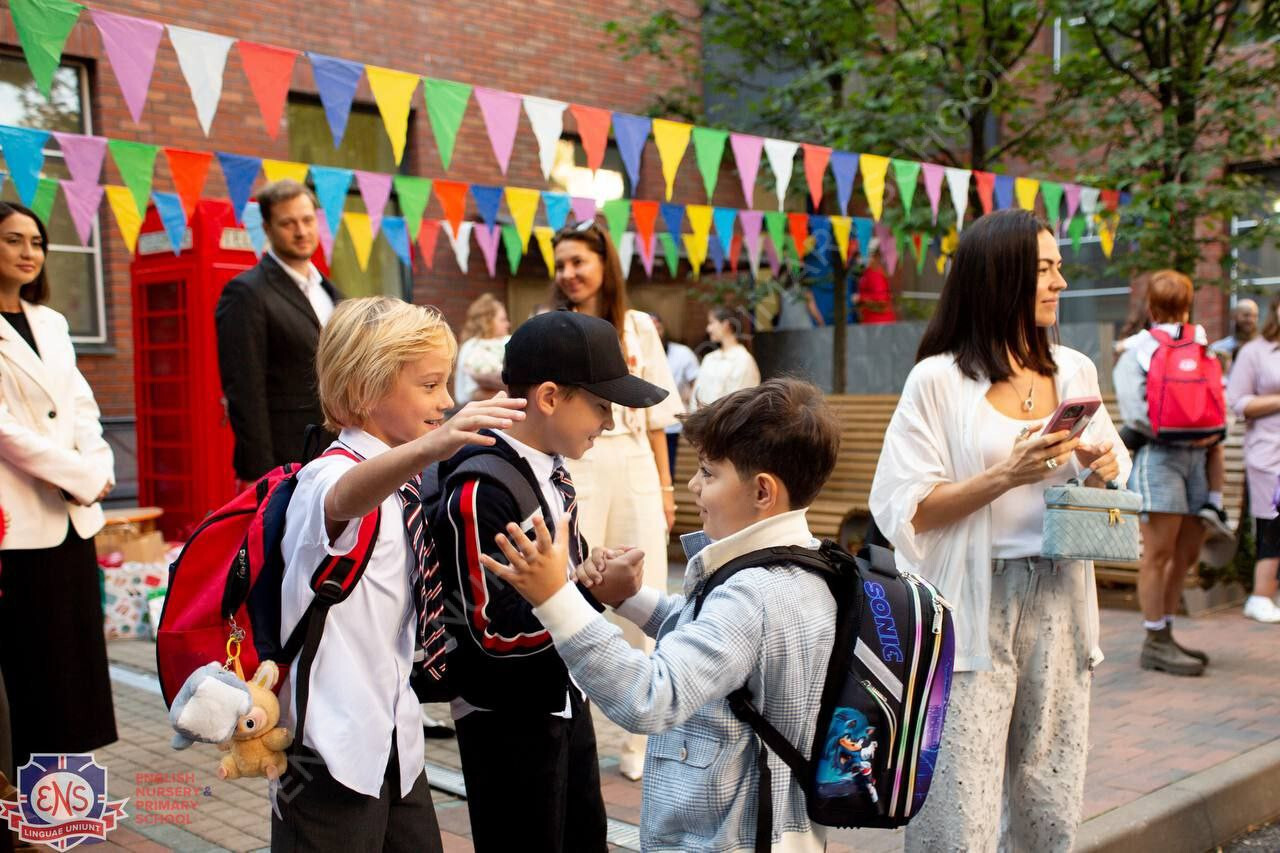
September 1 is always a special day. Everyone feels a little nervous: toddlers, schoolchildren, and even parents. New groups, new teachers, new friends—it’s always a small step into the unknown. And we want to tell you the most important thing: you’ve got this.
We are here for your children—and for you. We see them, we hear them, and we will support them at every stage. It matters to us that the first days of autumn are not stressful, but filled with the joy of new discoveries and achievements. And we will help children feel that there are always adults nearby who will help.
May the new school year be a year of friendship, small victories, and big discoveries for all of us. And if doubts or tiredness appear along the way, remember: we’re always here.
At ENS, September 1 stopped being just Knowledge Day a long time ago. For us, this day is also about care that stays with you. Everyone connected with ENS knows exactly what to bring on September 1. Spoiler: it’s not flowers.
We collect pet food for the “Nika” animal shelter. But it wasn’t always this way. This idea evolved over time, and here is how it happened.
The story began with a very personal moment—Maria Yuryevna’s birthday, the Director of ENS.
Every year, she would say honestly, “No gifts, please—I don’t want to put anyone out.” But in the end, dozens of bouquets would still appear. It was beautiful: imagine having flowers everywhere, both at home and at work. But it’s just as easy to imagine what started three days later: the flowers wilted, petals fell, and one thought kept coming back—“We could have done something more meaningful and alive.”
One day, Maria Yuryevna said, “Stop—let’s try something different. Instead of flowers, let it be books for the children’s home we work with.”
And something wonderful happened: the children received 74 new encyclopedias filled with bright pictures and fascinating stories. And this was about 15 years ago, when—let’s be honest—Wikipedia and YouTube were not the go-to sources of knowledge.
They read them eagerly, debated, and asked questions. Even Maria Yuryevna’s brother, who usually liked to do the opposite of what everyone expected, supported the idea that time—he donated travel discs about Marco Polo. And the children watched them again and again, discovering a whole new world.
That’s when we realized: yes, flowers are beautiful. But it’s far more valuable to invest our energy in something that lasts and continues to bring joy. That’s how our tradition was born: every September 1, we ask families to bring not bouquets, but pet food for animal shelters.
Because what could be better for a child than seeing how a small step can become a big, kind deed? Full bowls at the shelter, grateful eyes, and the understanding that a celebration is not only about ribbons and greeting cards, but about real participation.
We believe traditions like this help children and parents learn what matters most: to see value in actions—not only in beautiful wrapping.
We are here for your children—and for you. We see them, we hear them, and we will support them at every stage. It matters to us that the first days of autumn are not stressful, but filled with the joy of new discoveries and achievements. And we will help children feel that there are always adults nearby who will help.
May the new school year be a year of friendship, small victories, and big discoveries for all of us. And if doubts or tiredness appear along the way, remember: we’re always here.
At ENS, September 1 stopped being just Knowledge Day a long time ago. For us, this day is also about care that stays with you. Everyone connected with ENS knows exactly what to bring on September 1. Spoiler: it’s not flowers.
We collect pet food for the “Nika” animal shelter. But it wasn’t always this way. This idea evolved over time, and here is how it happened.
The story began with a very personal moment—Maria Yuryevna’s birthday, the Director of ENS.
Every year, she would say honestly, “No gifts, please—I don’t want to put anyone out.” But in the end, dozens of bouquets would still appear. It was beautiful: imagine having flowers everywhere, both at home and at work. But it’s just as easy to imagine what started three days later: the flowers wilted, petals fell, and one thought kept coming back—“We could have done something more meaningful and alive.”
One day, Maria Yuryevna said, “Stop—let’s try something different. Instead of flowers, let it be books for the children’s home we work with.”
And something wonderful happened: the children received 74 new encyclopedias filled with bright pictures and fascinating stories. And this was about 15 years ago, when—let’s be honest—Wikipedia and YouTube were not the go-to sources of knowledge.
They read them eagerly, debated, and asked questions. Even Maria Yuryevna’s brother, who usually liked to do the opposite of what everyone expected, supported the idea that time—he donated travel discs about Marco Polo. And the children watched them again and again, discovering a whole new world.
That’s when we realized: yes, flowers are beautiful. But it’s far more valuable to invest our energy in something that lasts and continues to bring joy. That’s how our tradition was born: every September 1, we ask families to bring not bouquets, but pet food for animal shelters.
Because what could be better for a child than seeing how a small step can become a big, kind deed? Full bowls at the shelter, grateful eyes, and the understanding that a celebration is not only about ribbons and greeting cards, but about real participation.
We believe traditions like this help children and parents learn what matters most: to see value in actions—not only in beautiful wrapping.