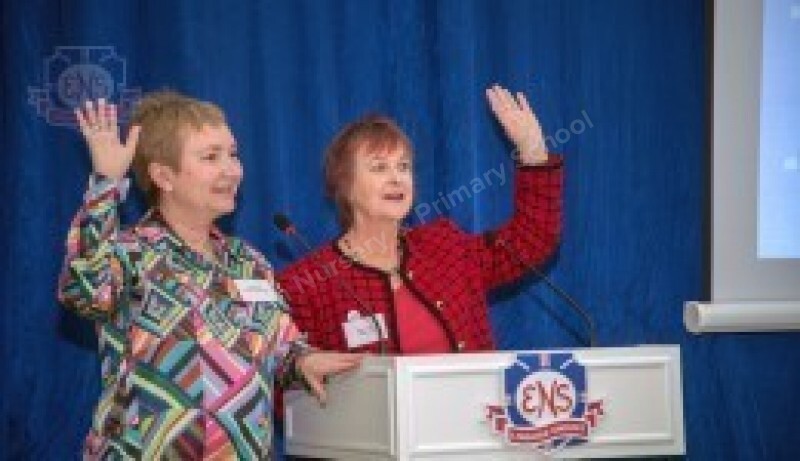
Bringing together representatives of government agencies, researchers, NGOs, and business on one platform created a unique space for open international dialogue.
On March 11, the 1st International Scientific and Practical Conference “Modern Support Technologies for Families Facing Difficult Life Circumstances” was held. Its main goal was the prevention of social orphanhood. The conference was organised and hosted by the English Nursery & Primary School network of English kindergartens and primary schools together with the Moscow Department of Social Protection, the Faculty of Psychology at Lomonosov Moscow State University, Moscow Region State University, the Institute for the Development of Family Services (IRSU), the Centre for Modern Childhood Studies at the Institute of Education (HSE University), the Khanty-Mansi Autonomous Area NGO “No One Else’s Children”, the charity foundation “Volunteers Helping Orphans”, and Mellow Parenting.
Russian experts spoke about how orphanhood can be prevented by providing timely support to biological parents. Legal professionals shared information about professional resources that people can access free of charge. Representatives of charitable foundations shared their experience of targeted support for families, while leading researchers presented statistical data on European countries and European legislation.
The invited guest from the United Kingdom—Dr Christine Puckering, author of the “Mellow Parenting” programme, a clinical and forensic psychologist, and an Honorary Senior Research Fellow in the Department of Child and Adolescent Psychiatry at the University of Glasgow—shared the programme’s principles and practical materials.
As part of the practical section of the conference, 14 workshops were delivered, where each speaker presented family-support approaches, including identifying the target group, determining “entry points” into a difficult situation, receiving a referral/request and gathering initial information, and establishing contact with the family.
Each participant received a conference proceedings booklet containing 37 articles outlining practical experience, tested methods, and the results of fundamental research.
On March 11, the 1st International Scientific and Practical Conference “Modern Support Technologies for Families Facing Difficult Life Circumstances” was held. Its main goal was the prevention of social orphanhood. The conference was organised and hosted by the English Nursery & Primary School network of English kindergartens and primary schools together with the Moscow Department of Social Protection, the Faculty of Psychology at Lomonosov Moscow State University, Moscow Region State University, the Institute for the Development of Family Services (IRSU), the Centre for Modern Childhood Studies at the Institute of Education (HSE University), the Khanty-Mansi Autonomous Area NGO “No One Else’s Children”, the charity foundation “Volunteers Helping Orphans”, and Mellow Parenting.
Russian experts spoke about how orphanhood can be prevented by providing timely support to biological parents. Legal professionals shared information about professional resources that people can access free of charge. Representatives of charitable foundations shared their experience of targeted support for families, while leading researchers presented statistical data on European countries and European legislation.
The invited guest from the United Kingdom—Dr Christine Puckering, author of the “Mellow Parenting” programme, a clinical and forensic psychologist, and an Honorary Senior Research Fellow in the Department of Child and Adolescent Psychiatry at the University of Glasgow—shared the programme’s principles and practical materials.
As part of the practical section of the conference, 14 workshops were delivered, where each speaker presented family-support approaches, including identifying the target group, determining “entry points” into a difficult situation, receiving a referral/request and gathering initial information, and establishing contact with the family.
Each participant received a conference proceedings booklet containing 37 articles outlining practical experience, tested methods, and the results of fundamental research.